DevOps vs DevSecOps: Accelerating Delivery with Security at Scale
In the digital-first enterprise, speed of software delivery is a strategic differentiator. DevOps and DevSecOps have emerged as two pivotal approaches to modern application delivery, sharing principles of automation, collaboration, and continuous improvement, yet diverging in orientation and objectives.
DevOps: The Bottom-Up Engine of Agility
DevOps was born to bridge development and operations, enabling rapid, reliable software delivery through practices like Continuous Integration/Continuous Delivery (CI/CD) and Infrastructure as Code. Its benefits include:
- Speed & Agility: Frequent code releases reduce time-to-market
- Developer Autonomy: Teams own the full lifecycle, fostering innovation
- Operational Efficiency: Automation minimizes errors and manual overhead
For example, in a retail banking environment, DevOps allows microservices-based teams to deploy updates independently, accelerating feature rollout without disrupting other modules.
DevSecOps: Security as a Strategic Imperative
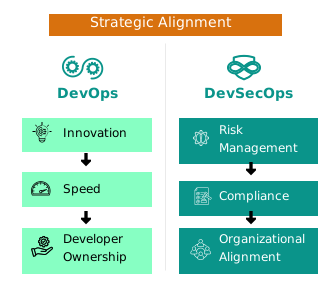
DevSecOps = DevOps + Security in every phase of application development and delivery lifecycle. It's more than shifting security left. It’s a cultural and governance transformation. Key advantages include:
- Security by Design: Mandatory scans (CVC, SAST, DAST, OSS) to catch vulnerabilities
- Compliance & Governance: Security certification is a mandate for software releases
- Secure Operations: Proactive measures lower security breach and compliance risks
In essence, DevOps is developer-driven, emphasizing productivity and speed; DevSecOps takes a safety-first approach with governance and compliance. While DevSecOps is pragmatic, it can potentially slow processes and create frustration around agility and productivity.
A common misstep by many CISO teams is imposing unrealistic restrictions that hinder business growth. The key lies in evaluating organizational maturity, regulatory obligations, tooling readiness, and cultural alignment before implementation.
DevOps vs DevSecOps: A Strategic Perspective on Application Delivery
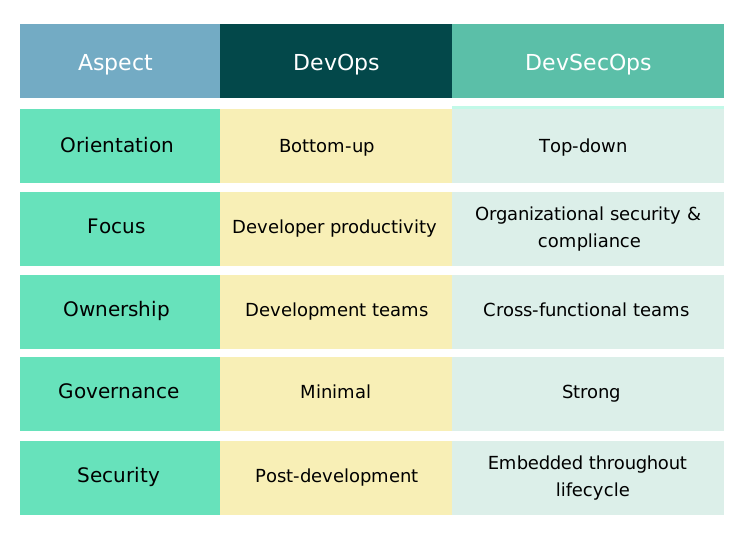
In today's digital-first enterprise, the velocity of software delivery is a competitive differentiator. DevOps and DevSecOps have emerged as two dominant paradigms. DevOps is developer-centric and bottom-up; DevSecOps is organization-centric and top-down, embedding security throughout the lifecycle.
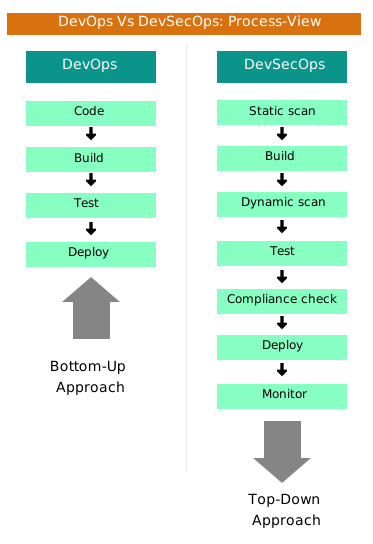
Figure: DevOps Vs DevSecOps: Process-View
DevOps: The Bottom-Up Engine of Innovation
DevOps emerged from the need to bridge development and operations teams. With components like CI/CD and infrastructure-as-code, teams can develop, test, and release reliably.
- Speed and Agility: DevOps pipelines empower developers to push code changes frequently, reducing time-to-market.
- Developer Autonomy: Teams own their code from development to deployment, fostering accountability and innovation.
- Operational Efficiency: Automating the delivery process helps reduce manual errors, while streamlining repetitive tasks.
Consider the Scenario of microservices deployment within an application development and delivery team at a retail banking enterprise. Using DevOps, developers can independently deploy updates to the loan processing module without affecting the payments module. CI/CD pipelines ensure that each service is tested and deployed automatically, enabling rapid iteration and feature rollout.
DevSecOps: The Top-Down Mandate for Secure Delivery
DevSecOps is a cultural transformation, not merely shifting security left. Accountability for application security spans all teams.
Key Benefits of DevSecOps
- Embedded Security: Security checks (SAST, DAST, OSS scans) are automated within pipelines, catching vulnerabilities early.
- Compliance & Governance: DevSecOps enforces policies and audit trails, essential for regulated industries.
- Risk Reduction: Imbibing security early in the cycle, ensures reduction in a potential breach or non-compliance.
Consider a scenario in a financial services, every code commit triggers static analysis, and every deployment undergoes vulnerability checks.
Philosophical Divergence: Bottom-Up vs Top-Down
Enterprise Considerations for Adoption
When planning to adopt DevOps or DevSecOps, enterprises must evaluate several dimensions:
- Organizational Maturity: DevOps fits agile, decentralized teams. DevSecOps requires mature governance.
- Regulatory Landscape: Heavily regulated industries need DevSecOps.
- Tooling & Automation: DevSecOps requires integrated security tools in CI/CD.
- Culture & Training: Developers must embrace security; security teams must understand development workflows.
Conclusion: Complementary, Not Competing
DevOps and DevSecOps are not mutually exclusive. In fact, DevSecOps builds upon DevOps by adding a layer of security and governance. Enterprises should view them as complementary strategies—DevOps accelerates delivery, while DevSecOps ensures that delivery is secure and compliant.
Choosing between DevOps and DevSecOps is driven by the enterprises' risk management strategy, regulatory compliance and team culture. By aligning these approaches with strategic goals, enterprises can achieve both speed and safety in software delivery.
Jile™ for DevSecOps
Modern enterprises face increasing pressure to deliver software rapidly while ensuring robust security and compliance. While DevOps accelerates innovation through automation and collaboration, DevSecOps extends these principles by embedding security and governance throughout the software lifecycle.
Enterprises require:
- Integrated Security: Automated security checks (SAST, DAST, OSS scans) within CI/CD pipelines.
- Compliance & Governance: Enforced policies, audit trails, and regulatory alignment.
- Cross-Functional Collaboration: Alignment among the development, maintenance and security teams.
- Scalability & Flexibility: Support for diverse technologies, frameworks, and deployment models.
- Actionable Insights: Unified dashboards for project health, risk, and compliance trends.
Key Features
- Portfolio & Lean Management: Vision, OKRs, lean portfolio management, and hierarchical team topology.
- Integrated CI/CD Pipelines: Intuitive pipeline creation canvas, pipeline-as-code, and preset pipelines.
- Security & Compliance Automation: Embedded security tools, quality gates, and compliance checks.
- Collaboration & Visibility: Team collaboration, documentation (Wiki), dashboards, and notifications.
- Customization & Extensibility: Configurable workflows, custom fields, adaptors, and plugins.
- Deployment Flexibility: Provisioning on hyperscalers or on-premise environments
Key Benefits
- Faster Time-to-Market: Streamlined setup and automation accelerate delivery cycles.
- Improved Product Quality: Standardized processes, early NFR definitions, and integrated testing enhance quality.
- Reduced Risk & Enhanced Compliance: Automated security and compliance checks minimize vulnerabilities and audit failures.
- Unified Insights: Dashboards with actionable insights on continuous progress.
- Adaptive at Every Level: Supports scaling from single teams to enterprise-wide adoption, adapting to preferred frameworks and processes.
Jile for DevSecOps - Automation of IP Safety
Enterprises face IP safety risks with open-source usage, licensing, patents, and more. Jile automates IP compliance inside the DevSecOps pipeline.
Key Stages
- Asset Registration & Release Initiation: All assets tracked with full traceability.
- Automated IP Safety Workflows: Manual + automated tests, license checks, image scans, SAST/OSS scans.
- Centralized Analysis & Action Management: Consolidated reporting and issue flagging.
- Approval & Audit Readiness: IPAM-based IP-safe approval with dashboards.
Key Benefits
- End-to-End Automation: Eliminates manual bottlenecks, reducing the risk of human error and accelerating time-to-market.
- Continuous Compliance: Embeds IP safety into every release, ensuring ongoing alignment with legal and regulatory requirements.
- Unified Governance: Centralizes all IP-related checks, actions, and approvals within a single platform.
- Actionable Insights: Dashboards and reports provide clear visibility into IP risk posture and compliance progress.
- Scalable & Adaptable: Supports diverse technologies and can be tailored to enterprise-specific IP policies and workflows.
Jile™ empowers enterprise teams to deliver innovation at speed—confident that every release is IP-safe, compliant, and ready for the market.
Author

Thanks for subscribing to our latest blogs, thought leadership and other product updates!
Read our Privacy Notice to know more. You can opt-out of all communications anytime.